Choosing between Japan and South Korea for higher education is a significant decision for students from mainland China. Both nations offer world-class universities, vibrant cultures, and unique opportunities, but they differ in educational systems, living expenses, and cultural environments. This comprehensive comparison examines education quality, cost of living, and cultural adaptation to help Chinese students make an informed choice based on their academic interests, budget, and cultural preferences.
教育质量与学术声誉
Japan and South Korea both boast prestigious universities with strong global rankings. Japan is home to institutions like the University of Tokyo and Kyoto University, which consistently rank among the top in Asia. South Korea’s Seoul National University, KAIST, and Yonsei University are also highly regarded. According to the 2024 QS World University Rankings, Japan has 10 universities in the top 200, while South Korea has 7. However, the focus of education differs: Japanese universities emphasize research and traditional academic rigor, while Korean institutions often integrate industry collaboration and technology-driven curricula.
For Chinese students, language proficiency is crucial. Most undergraduate programs in Japan require Japanese Language Proficiency Test (JLPT) N2 or higher, while graduate programs may accept English for international courses. In South Korea, TOPIK level 3 or above is typically needed for undergraduate admissions, with many universities offering English-taught programs at the graduate level. Both countries provide language preparatory courses, but Japan’s system is more structured, with many students attending language schools before university.
专业优势与就业前景
Japan excels in engineering, robotics, automotive technology, and traditional arts. Companies like Toyota and Sony offer internship opportunities, and the government’s “JET Programme” attracts international talent. South Korea leads in IT, semiconductor technology, entertainment, and business management. Samsung, LG, and Hyundai are major employers, and the K-pop and film industries provide unique career paths.
A comparison of key fields:
| Field | Japan Strengths | South Korea Strengths |
|---|---|---|
| Engineering | Robotics, automotive, materials science | Semiconductors, electronics, shipbuilding |
| IT & Computing | Artificial intelligence, cybersecurity | Software development, gaming, mobile tech |
| Business & Economics | International trade, finance | Entrepreneurship, global business |
| Arts & Culture | Traditional arts, animation, design | K-pop, film, digital media |
Both countries have high graduate employment rates, but work visa policies differ. Japan’s “Highly Skilled Professional” visa offers a fast track to permanent residency, while South Korea’s E-7 visa requires employer sponsorship but has been simplified for graduates from Korean universities.
生活成本与经济负担
Living expenses are a major factor for Chinese students. According to Numbeo’s 2024 Cost of Living Index, Seoul is about 15% cheaper than Tokyo. Below is a breakdown of average monthly costs (in USD):
| Expense Category | Tokyo, Japan | Seoul, South Korea |
|---|---|---|
| Rent (1-bedroom) | $800 - $1,200 | $500 - $800 |
| Food | $400 - $600 | $300 - $500 |
| Transportation | $100 - $150 | $50 - $80 |
| Utilities | $120 - $180 | $100 - $150 |
| Total (approx.) | $1,500 - $2,200 | $1,000 - $1,600 |
Tuition fees are comparable: public universities in Japan charge around $5,000 - $8,000 per year, while private ones can exceed $12,000. In South Korea, national universities cost $4,000 - $7,000, and private institutions $8,000 - $12,000. Both countries offer scholarships for international students, such as Japan’s MEXT Scholarship and South Korea’s Global Korea Scholarship (GKS). Part-time work is allowed up to 28 hours per week in Japan and 20 hours per week in South Korea, with similar minimum wages around $8 - $10 per hour.
文化适应与日常生活
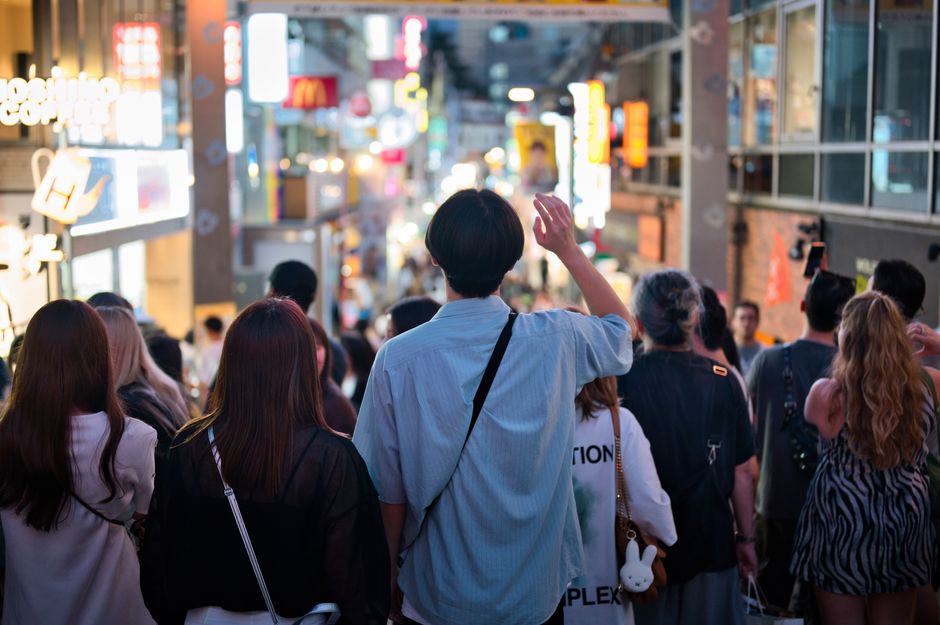
Cultural familiarity can ease the transition for Chinese students. Both Japan and South Korea share Confucian values, respect for education, and hierarchical social norms. However, Japan’s culture is more reserved and rule-oriented, while South Korea is more expressive and fast-paced. Chinese students often find Korean social interactions more similar to their own, with a greater emphasis on communal dining and group activities.
Language barriers exist in both countries. While many young people speak some English, daily life requires Japanese or Korean. Learning the language is essential for integration. Japan’s writing system includes kanji, which Chinese students can recognize, giving them an advantage. Korean uses Hangul, a phonetic alphabet that is easier to learn but lacks shared characters.
Food is another consideration. Japanese cuisine is known for its subtle flavors and fresh ingredients, while Korean food is spicier and more fermented. Both are widely available in China, so students may already have preferences. Public transportation is excellent in both countries, with efficient subways and buses.

留学政策与签证流程
Japan and South Korea have streamlined visa processes for Chinese students. Japan’s student visa requires a Certificate of Eligibility, which can take 1-3 months. The application process is detailed but reliable. South Korea’s D-2 visa is generally faster, with some universities offering simplified procedures. Both countries allow dependents to accompany students under certain conditions.
Health insurance is mandatory: Japan’s National Health Insurance covers 70% of medical costs, while South Korea’s National Health Insurance Service provides similar coverage. International students must enroll upon arrival.
长期发展机会
Post-graduation options are a key factor. Japan has been actively recruiting international talent due to its aging population, offering pathways to permanent residency after 5 years (or 3 years for highly skilled professionals). South Korea’s job market is competitive, but graduates from Korean universities can apply for a job-seeking visa (D-10) and have advantages in sectors like IT and engineering.
Both countries have strong economies and global companies, but Japan’s work culture is known for long hours and strict hierarchy, while South Korea’s corporate environment is also demanding but has been evolving with younger generations pushing for work-life balance.
总结:如何选择?
For Chinese students, the choice depends on personal priorities:
- 专业偏好: If interested in traditional engineering, robotics, or anime/design, Japan may be better. For IT, semiconductors, or entertainment, South Korea is a strong choice.
- 预算: South Korea generally offers lower living costs and tuition, though scholarships in both countries can offset expenses.
- 文化亲近感: Those who prefer a more familiar social atmosphere might lean toward South Korea, while those attracted to a unique, disciplined culture may choose Japan.
Ultimately, both Japan and South Korea provide excellent education and career opportunities. Visiting the countries, talking to alumni, and researching specific programs can help make the best decision.
FAQ
1. Is it easier to get a scholarship in Japan or South Korea?
Both countries offer generous scholarships, but competition varies. Japan’s MEXT scholarship is prestigious and covers full tuition and living expenses, but it’s highly competitive. South Korea’s GKS also provides full funding and has a similar application process. Additionally, many universities offer their own scholarships, often based on academic merit or language proficiency.
2. Can I work part-time while studying, and how does it affect my studies?
Yes, both countries allow part-time work with restrictions. In Japan, you can work up to 28 hours per week (42 during holidays) after obtaining permission. In South Korea, the limit is 20 hours per week (unlimited during vacations) for undergraduate students. Balancing work and study requires time management, but many students find part-time jobs helpful for language practice and living expenses.
3. Which country has better post-graduation job prospects for Chinese students?
Both have strong job markets, but it depends on your field. Japan has a demand for engineers, IT professionals, and researchers, with easier permanent residency pathways. South Korea offers opportunities in technology, business, and entertainment, but work visas can be more employer-dependent. Networking and internships during studies are crucial in both countries.