Choosing between the United Kingdom and the United States for higher education is one of the most significant decisions an international student can make. Both countries boast world-renowned universities, vibrant cultures, and extensive opportunities, yet they differ fundamentally in academic structure, cost, and career pathways. This article provides a comprehensive, data-driven comparison to help you navigate these differences and make an informed choice.
Academic Systems: Structure and Approach
The academic frameworks in the UK and US reflect distinct educational philosophies. In the UK, undergraduate degrees are typically three years in England and Wales (four in Scotland), with a strong emphasis on early specialization. Students apply to a specific course, such as Law or Physics, and their curriculum is largely fixed from the start. This focused approach allows for in-depth study but offers limited flexibility to explore other disciplines. In contrast, US undergraduate programs span four years and champion a liberal arts model. Students often declare a major after two years of general education, sampling courses across humanities, sciences, and social sciences. This breadth fosters interdisciplinary thinking but may delay professional specialization.
Postgraduate studies further highlight contrasts. UK master’s programs are commonly one year, intensive, and research- or coursework-based, with a dissertation component. US master’s degrees usually take two years, incorporating more coursework and sometimes a thesis. Doctoral programs in the UK often expect a relevant master’s degree and focus immediately on research, typically lasting three to four years. In the US, PhD programs integrate two years of coursework before candidacy exams, extending the duration to five to seven years but providing broader training.
Assessment methods differ as well. UK courses rely heavily on final exams and a dissertation, while US programs use continuous assessment, including quizzes, midterms, and participation. According to the Higher Education Statistics Agency (HESA) and the National Center for Education Statistics (NCES), these structural differences influence student satisfaction and completion rates. For instance, the UK’s Office for Students reported in 2023 that 90% of full-time first-degree students continued or qualified, while the US NCES found a 64% six-year graduation rate for first-time, full-time undergraduates at four-year institutions in 2022. This disparity partly stems from the UK’s streamlined degree path versus the US’s flexible but potentially longer route.
| Feature | United Kingdom | United States |
|---|---|---|
| Undergraduate Duration | 3 years (4 in Scotland) | 4 years |
| Specialization | Early, fixed subject | Late, liberal arts exploration |
| Master’s Duration | 1 year | 2 years |
| PhD Structure | Direct research, 3-4 years | Coursework + research, 5-7 years |
| Assessment Style | Exam-focused, dissertation | Continuous, varied |
| Graduation Rate (Bachelor’s) | ~90% continuation/qualification (2023) | ~64% six-year rate (2022) |
Sources: HESA Performance Indicators, NCES Fast Facts
Cost of Living and Tuition: A Financial Breakdown
Finances are a critical factor. Tuition fees in the UK vary by institution and region but are generally lower than in the US for international students. For 2023/24, the average international undergraduate tuition in the UK ranged from £11,400 to £38,000 per year, with medical degrees at the higher end (source: Study UK). In the US, the College Board reported average international tuition and fees for 2023/24 at $28,000 to $60,000 annually at four-year institutions, with private colleges often exceeding $60,000.
Living costs also diverge. The UK requires international students to demonstrate living expenses of £1,334 per month in London and £1,023 outside London for visa purposes, totaling approximately £12,000–£16,000 per year. In the US, living expenses vary widely by location; the College Board estimates $12,000–$18,000 per year for room and board, but urban centers like New York or San Francisco can push costs higher. Healthcare is another distinction: the UK’s National Health Service (NHS) surcharge of £776 per year grants access to public healthcare, while US students must purchase private insurance, averaging $2,000–$4,000 annually.
Scholarships and financial aid are more abundant in the US, with many universities offering need-based and merit-based awards. The UK has fewer scholarships for international students, though programs like Chevening and Commonwealth Scholarships are notable. A 2024 analysis by the Institute of International Education (IIE) found that 55% of international students in the US received some institutional aid, compared to 25% in the UK. However, the shorter duration of UK degrees can offset higher annual costs, making the total investment comparable.
Career Prospects and Post-Study Work Rights
Employment outcomes are a top priority. The UK’s Graduate Route, introduced in 2021, allows international students to stay and work for two years after completing a degree (three years for PhDs). This visa does not require sponsorship, providing flexibility to gain experience. According to the UK Home Office, over 100,000 Graduate Route visas were granted in 2023, with high demand in sectors like finance, tech, and engineering. The US Optional Practical Training (OPT) program offers 12 months of work authorization, with a 24-month STEM extension for eligible fields. In 2023, US Citizenship and Immigration Services reported over 200,000 OPT participants, though the H-1B visa pathway remains competitive and lottery-based.
Employment rates post-graduation vary. The UK’s Higher Education Statistics Agency (HESA) Graduate Outcomes survey for 2021/22 showed that 89% of international graduates were employed or in further study 15 months after graduation. In the US, the National Association of Colleges and Employers (NACE) reported in 2023 that 85% of international graduates seeking employment received job offers within six months, but this figure includes those returning home. Salary expectations also differ: UK starting salaries for graduates average £30,000–£35,000, while US starting salaries range from $50,000 to $70,000, though this reflects higher living costs and sector variations.
Industry connections are strong in both countries. The UK’s finance hub in London and growing tech sector in cities like Manchester attract global talent. The US dominates in Silicon Valley tech, Wall Street finance, and research institutions. However, the UK’s shorter degree timeline can mean quicker entry into the workforce, while the US’s extensive internship culture during longer programs builds deeper networks.
Cultural and Lifestyle Considerations
Beyond academics and careers, the cultural experience shapes a student’s journey. The UK offers proximity to Europe, a rich historical tapestry, and a multicultural urban environment. The US, with its vast geography, provides diverse climates and regional cultures, from the East Coast’s colonial charm to the West Coast’s innovation hubs. Social integration differs: UK universities often have strong student unions and pub culture, whereas US campuses emphasize sports, clubs, and Greek life. International student communities are robust in both, with the UK hosting 680,000 international students in 2022/23 (HESA) and the US over 1 million in 2023 (IIE).
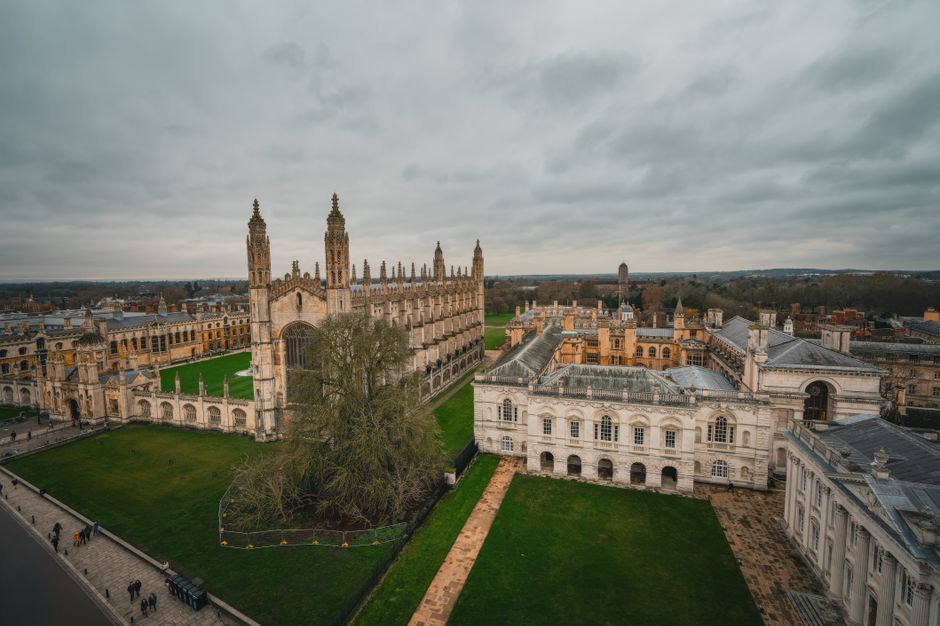
Language and communication styles also vary. While both are English-speaking, UK academic writing and discourse may be more formal, whereas US classrooms encourage open debate. Time zones can affect students from Asia or Africa, with the UK’s GMT being more aligned with those regions than the US’s multiple time zones.
Visa Policies and Immigration
Visa processes are straightforward but distinct. The UK Student Visa requires a Confirmation of Acceptance for Studies (CAS), financial proof, and English proficiency. The application fee is £490, with the NHS surcharge. Processing times are typically three weeks. The US F-1 visa requires a Form I-20, SEVIS fee, and interview, with a $185 application fee. Delays can occur due to administrative processing. Post-study, the UK’s path to settlement is clearer through the Skilled Worker visa, while the US H-1B cap poses uncertainty. Both countries have seen policy shifts: the UK’s 2024 review of the Graduate Route maintained its stability, while the US has proposed changes to OPT stem extensions, though no major reforms passed as of 2025.
Making Your Decision: Key Factors
To choose wisely, consider your academic goals, financial capacity, and career aspirations. If you prefer early specialization and a faster track to employment, the UK may suit you. If you value exploration and a broad network, the US could be better. Financially, calculate total degree cost, not just annual fees. Research specific programs and their industry links; for example, UK MBA programs often target European markets, while US MBAs dominate globally.
A 2024 QS survey found that 68% of international students prioritized post-study work rights, making visa policies crucial. Both countries offer strong returns on investment, but the UK’s shorter programs and recently stabilized visa route appeal to those seeking efficiency, while the US’s diverse opportunities attract risk-tolerant individuals.
FAQ
Which country offers better scholarships for international students?
The US generally provides more scholarships and assistantships, with many universities offering merit-based and need-based aid. The UK has fewer options, but prestigious awards like Chevening and Commonwealth Scholarships are available. Always check individual university websites for funding opportunities.
Can I work while studying in the UK or US?
Yes, both allow part-time work. In the UK, students can work up to 20 hours per week during term. In the US, on-campus work is permitted up to 20 hours, with off-campus options like CPT and OPT after the first year. Regulations are strict, so ensure compliance.
How do I choose between a UK and US university for a specific major?
Research program rankings, faculty expertise, and industry connections. For example, the UK excels in law and arts, while the US leads in tech and business. Use resources like UCAS for UK courses and College Board for US programs.
What is the impact of Brexit on international students in the UK?
Brexit has not diminished the UK’s appeal; the Graduate Route and EU fee alignment changes have streamlined processes. EU students now pay international fees, but overall numbers remain high, with HESA reporting record enrollments from non-EU countries in 2023.
Is it easier to get permanent residency in the UK or US after studying?
The UK offers a more linear path via the Skilled Worker visa after the Graduate Route, with settlement possible in five years. The US path is complex, often requiring H-1B sponsorship and a green card process that can take decades. The UK is generally considered more straightforward.
References
- British Council. (2023). Study UK: Tuition Fees. https://study-uk.britishcouncil.org/
- College Board. (2023). Trends in College Pricing and Student Aid. https://research.collegeboard.org/
- Higher Education Statistics Agency. (2023). Graduate Outcomes Survey. https://www.hesa.ac.uk/
- National Center for Education Statistics. (2022). Undergraduate Retention and Graduation Rates. https://nces.ed.gov/
- UK Home Office. (2023). Graduate Route Visa Statistics. https://www.gov.uk/government/statistics
- Institute of International Education. (2024). Open Doors Report. https://opendoorsdata.org/
 