
Introduction
Australia’s Group of Eight (Go8) universities represent the pinnacle of higher education in the country, consistently ranking among the world’s top 100 institutions. For international students considering study abroad, these universities offer a combination of academic excellence, research opportunities, and strong industry connections. This comprehensive guide explores the distinctive strengths of each Go8 university, their flagship programs, and essential application strategies for prospective students.
Understanding the Group of Eight
The Group of Eight comprises Australia’s leading research-intensive universities: Australian National University (ANU), University of Melbourne, University of Sydney, University of New South Wales (UNSW), University of Queensland (UQ), Monash University, University of Western Australia (UWA), and University of Adelaide. These institutions receive over 70% of Australian competitive research funding and produce graduates who are highly sought after globally.
| University | QS World Ranking 2024 | THE World Ranking 2024 | Location |
|---|---|---|---|
| Australian National University | 34 | 62 | Canberra |
| University of Melbourne | 14 | 37 | Melbourne |
| University of Sydney | 19 | 58 | Sydney |
| University of New South Wales | 19 | 71 | Sydney |
| University of Queensland | 43 | 53 | Brisbane |
| Monash University | 42 | 44 | Melbourne |
| University of Western Australia | 72 | 131 | Perth |
| University of Adelaide | 89 | 88 | Adelaide |
Data sourced from QS World University Rankings 2024 and Times Higher Education World University Rankings 2024
Australian National University (ANU)
Academic Strengths and Signature Programs
ANU, located in Australia’s capital Canberra, is renowned for its strengths in politics, international relations, and social sciences. The university’s proximity to Parliament House and government agencies provides unparalleled opportunities for internships and research collaborations.
The Bachelor of International Relations is one of ANU’s most prestigious programs, consistently ranked among the top 10 globally. Students benefit from the expertise of the Coral Bell School of Asia Pacific Affairs, a world leader in strategic studies. The program offers specializations in areas such as global security, international political economy, and diplomacy.
ANU’s College of Law is another standout, offering a Juris Doctor program that emphasizes legal theory and practice. The university’s legal research ranks highly, with particular strengths in international law, environmental law, and human rights law.
For science enthusiasts, the Research School of Earth Sciences offers cutting-edge programs in geology, climate science, and environmental studies. ANU’s partnership with government bodies like Geoscience Australia enhances research opportunities.
Admission Insights
ANU operates on a rolling admissions basis, but international students are advised to apply early due to competitive entry. For undergraduate programs, a minimum ATAR equivalent of 85 is typically required, though some programs like Law and Medicine demand significantly higher scores. Postgraduate applicants need a strong academic record and, for research degrees, a well-developed research proposal.
English language requirements include an IELTS overall score of 6.5 (no band below 6.0) for most programs, with higher requirements for law and health sciences.
University of Melbourne
Academic Strengths and Signature Programs
The University of Melbourne is Australia’s highest-ranked university globally and is known for its distinctive Melbourne Model, which offers broad undergraduate degrees followed by specialized graduate programs. This approach mirrors leading US and European institutions.
The Bachelor of Commerce is highly regarded, providing a strong foundation in economics, finance, and management. Graduates often progress to the Master of Finance, which is ranked among the world’s best and is recognized by the CFA Institute.
Melbourne’s Melbourne Law School is a powerhouse, with its Juris Doctor program attracting top students globally. The school’s research centers on areas like intellectual property, international arbitration, and corporate law.
The Faculty of Medicine, Dentistry and Health Sciences is a leader in biomedical research. The Doctor of Medicine program is highly competitive and integrates clinical training from early stages. The university’s partnerships with hospitals like the Royal Melbourne Hospital enhance practical learning.
In arts and humanities, the Bachelor of Arts offers extensive majors, including psychology, media, and languages. The university’s Victorian College of the Arts provides specialized training in visual and performing arts.
Admission Insights
Melbourne’s admission process is holistic. For undergraduates, equivalent ATARs above 90 are common for competitive courses. The university considers personal statements and extracurricular activities. Postgraduate coursework programs require a relevant bachelor’s degree with strong grades; some, like the Master of Management, may require GMAT scores.
IELTS requirements generally are 6.5 overall (no band below 6.0), but courses like teaching and law require 7.0 or higher.
University of Sydney
Academic Strengths and Signature Programs
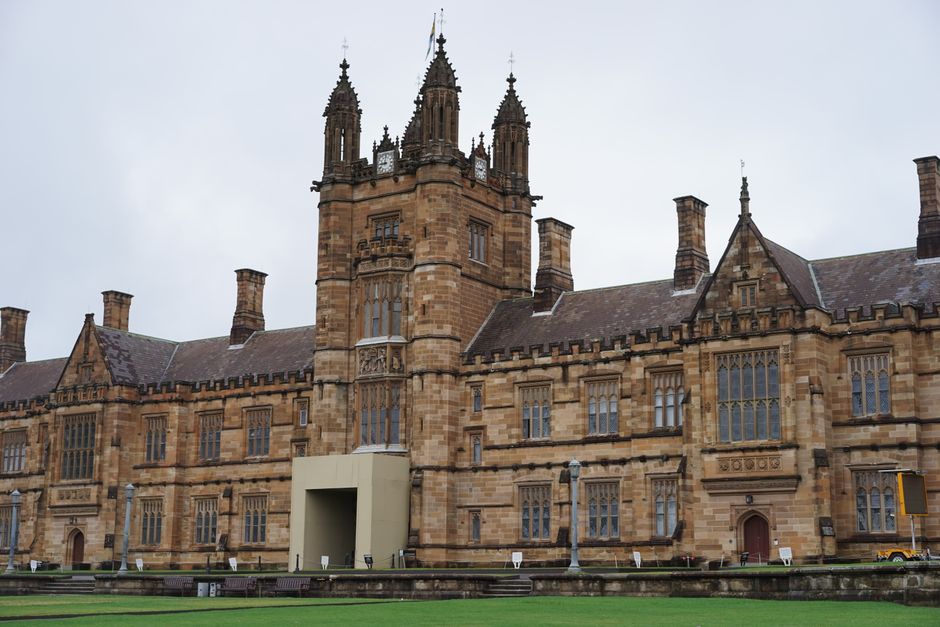
As Australia’s oldest university, the University of Sydney combines tradition with innovation. Its sandstone campus and strong alumni network are major draws.
The Bachelor of Engineering Honours offers flexible specializations including civil, mechanical, and software engineering. The university’s Faculty of Engineering is known for research in robotics, renewable energy, and biomedical engineering. Industry placements are a key component.
Sydney’s Business School is triple-accredited (AACSB, AMBA, EQUIS) and offers a highly ranked Master of Management. The program emphasizes leadership and strategic thinking, with opportunities for global exchange.
The Sydney Law School is one of the most prestigious in the Asia-Pacific, offering a comprehensive Juris Doctor. The school’s clinics and internships provide hands-on experience in legal practice.
Health sciences are another strength, with the Sydney Medical School offering a Doctor of Medicine program that emphasizes research and clinical excellence. The university’s affiliated teaching hospitals are among Australia’s best.
Admission Insights
Entry to Sydney is competitive. Undergraduate applicants need ATAR equivalents of 80-95 depending on the program. The university accepts a range of international qualifications, including A-levels and IB. Postgraduate admissions vary; for example, the Master of Commerce requires a bachelor’s degree with a credit average.
English language requirements: IELTS 6.5 overall (no band below 6.0) for most courses, with higher scores for education, law, and health programs.
University of New South Wales (UNSW)
Academic Strengths and Signature Programs
UNSW is globally recognized for its engineering, technology, and business programs. Located in Sydney, it has strong industry ties and a focus on innovation.
The Bachelor of Engineering (Honours) is UNSW’s flagship, with specializations in photovoltaic and renewable energy engineering, where UNSW holds world records for solar cell efficiency. The university’s School of Computer Science and Engineering is also top-ranked for artificial intelligence and data science.
UNSW’s Business School offers a Bachelor of Commerce with majors in finance, accounting, and business analytics. The Master of Finance is highly regarded and is a CFA Program Partner. The school’s fintech and entrepreneurship hubs provide real-world experience.
The Faculty of Law & Justice offers a combined LLB program that integrates legal theory with practical skills. UNSW’s focus on technology law and intellectual property is notable.
In creative arts, UNSW’s Art & Design campus offers cutting-edge programs in media arts, design, and digital innovation.
Admission Insights
UNSW uses a trimester system, allowing flexible intakes. Entry requirements are high: for engineering, ATAR equivalents above 90 are typical. The university offers pathway programs through UNSW College for students who do not meet direct entry.
IELTS requirements: 6.5 overall (no band below 6.0) for most programs; 7.0 for law and education.
University of Queensland (UQ)
Academic Strengths and Signature Programs
UQ is a leader in biological sciences, biotechnology, and environmental research. Its main campus in Brisbane is known for its beautiful grounds and research facilities.
The Bachelor of Biotechnology is a standout, with UQ being home to the Australian Institute for Bioengineering and Nanotechnology. Students engage in cutting-edge research in areas like vaccine development and genetic engineering.
UQ’s Business School is AACSB and EQUIS accredited, offering a strong Bachelor of Commerce and a highly ranked MBA program. The school’s strengths include tourism management and sustainability.
The School of Veterinary Science is one of the best in the world, offering a Bachelor of Veterinary Science (Honours) that combines animal science with clinical training at UQ’s Gatton campus.
In humanities, UQ’s School of Communication and Arts excels in journalism and media studies, with strong industry connections.
Admission Insights
UQ offers two main intakes (February and July). Undergraduate entry typically requires ATAR equivalents of 80-90. The university has generous credit transfer policies for international students with prior study.
IELTS requirements: 6.5 overall (no band below 6.0) for most courses; 7.0 for teaching and health sciences.
Monash University
Academic Strengths and Signature Programs
Monash is Australia’s largest university, with a global presence including campuses in Malaysia and Italy. It is particularly strong in pharmacy, engineering, and health sciences.
The Bachelor of Pharmacy (Honours) is world-renowned, with Monash’s Faculty of Pharmacy and Pharmaceutical Sciences consistently ranked in the top 3 globally. The program integrates clinical practice and research in drug discovery.
Monash’s Faculty of Engineering offers a wide range of specializations, including chemical and materials engineering. The university’s research in additive manufacturing and sustainable engineering is cutting-edge.
The Monash Business School is triple-accredited and offers a Bachelor of Commerce with unique majors like econometrics and business statistics. The Master of Business Administration is highly ranked in Australia.
In medicine, the Bachelor of Medical Science and Doctor of Medicine is a direct-entry program for high-achieving students, emphasizing early clinical exposure.
Admission Insights
Monash has a high volume of international students and offers flexible pathways. Undergraduate entry requires ATAR equivalents of 75-95 depending on the course. The university’s Monash College provides foundation and diploma programs.
IELTS requirements: 6.5 overall (no band below 6.0) for most programs; 7.0 for law, medicine, and education.
University of Western Australia (UWA)
Academic Strengths and Signature Programs
UWA, located in Perth, is known for its strengths in geosciences, marine biology, and agriculture, leveraging its unique Western Australian environment.
The Bachelor of Science with a major in Marine Science is world-class, with access to the Indian Ocean and research stations like the Watermans Bay Marine Laboratory. UWA’s Oceans Institute is a global leader in marine research.
UWA’s Faculty of Engineering and Mathematical Sciences offers specialized programs in mining and petroleum engineering, capitalizing on Western Australia’s resources sector. Industry placements with companies like BHP and Rio Tinto are common.
The UWA Business School is AACSB and EQUIS accredited, offering a Bachelor of Commerce with strengths in natural resource management and finance.
In health, UWA’s Doctor of Medicine program is highly regarded, with a focus on rural and remote medicine, reflecting the state’s vast geography.
Admission Insights
UWA has a streamlined admission process. Undergraduate entry requires ATAR equivalents of 80-90. The university accepts a wide range of international curricula and offers conditional offers.
IELTS requirements: 6.5 overall (no band below 6.0) for most courses; 7.0 for medicine and law.
University of Adelaide
Academic Strengths and Signature Programs
Adelaide is a member of the Go8 with strengths in agriculture, wine science, and health sciences. It is known for its research in food security and sustainability.
The Bachelor of Viticulture and Oenology is unique, leveraging South Australia’s world-famous wine regions. Students gain hands-on experience at the Waite Campus, home to the Australian Research Council Centre of Excellence in Plant Cell Walls.
Adelaide’s Faculty of Health and Medical Sciences offers strong programs in nursing, dentistry, and public health. The Bachelor of Dental Surgery is highly competitive and integrates clinical training early.
The School of Computer Science is growing in reputation, with research strengths in machine learning and cybersecurity. The university’s Australian Institute for Machine Learning is a leading research center.
In business, the Adelaide Business School offers a Bachelor of Commerce with a focus on entrepreneurship and international business.
Admission Insights
Adelaide offers a personalized admission experience. Entry requirements are slightly lower than some Go8 peers, with ATAR equivalents of 75-85 for many programs. The university provides generous scholarships for international students.
IELTS requirements: 6.5 overall (no band below 6.0) for most programs; 7.0 for health sciences and law.
Application Strategies for Go8 Universities
Timing and Deadlines
Most Go8 universities have two main intakes: Semester 1 (February/March) and Semester 2 (July). Application deadlines vary, but it is advisable to apply 6-12 months in advance. For competitive programs, early application is crucial. Some universities like ANU and Melbourne have specific rounds for certain courses.
Documentation Requirements
A complete application typically includes:
- Academic transcripts and certificates
- English language proficiency test scores (IELTS, TOEFL, PTE)
- Personal statement or statement of purpose
- Letters of recommendation (for some postgraduate programs)
- Portfolio or audition (for arts and design programs)
- Research proposal (for research degrees)
English Language Preparation
Meeting English requirements is essential. Most Go8 universities accept IELTS, TOEFL, and PTE Academic. Some also offer English language pathway programs for students who fall slightly short of direct entry requirements.
Financial Planning
Tuition fees for Go8 universities range from AUD 30,000 to 50,000 per year for undergraduate programs, with postgraduate fees varying widely. Living costs in Australia average AUD 21,000 per year. International students should budget for health cover (OSHC) and visa fees.
Scholarships are available: the Australia Awards, university-specific international scholarships, and research training programs. Some universities 有机会免申请费 for international students through specific events or agent partnerships, but this is not guaranteed.
Visa Process
International students require a Student Visa (subclass 500). Key requirements include Confirmation of Enrolment (CoE) from a Go8 university, genuine temporary entrant statement, financial capacity evidence, and health insurance.
FAQ
1. What are the main differences between the Go8 universities?
Each Go8 university has unique strengths: ANU excels in politics and international relations; Melbourne and Sydney are strong across most disciplines with a traditional prestige; UNSW leads in engineering and technology; UQ is known for biological sciences; Monash for pharmacy; UWA for marine and resources; and Adelaide for agriculture and wine science. Location also matters: Melbourne and Sydney are larger, more expensive cities, while Brisbane, Perth, Adelaide, and Canberra offer a lower cost of living.
2. Can I work while studying at a Go8 university?
Yes, international students on a student visa can work up to 48 hours per fortnight during study periods and unlimited hours during breaks. Go8 universities have strong career services to help students find part-time work, internships, and graduate positions. However, it is important to balance work with academic commitments, as Go8 programs are rigorous.
3. Are there any pathway programs to enter Go8 universities if I don’t meet direct entry requirements?
Many Go8 universities offer foundation studies or diploma programs through affiliated colleges, such as UNSW College, Monash College, and Trinity College (University of Melbourne). These programs provide academic preparation and English language training, with guaranteed entry to undergraduate degrees upon successful completion. This is a neutral pathway and does not include TAFE or vocational training.
4. How do Go8 universities support international students?
All Go8 universities have dedicated international student support services, including orientation programs, academic skills workshops, counseling, and career advice. They also have active student societies and cultural clubs. The universities prioritize student wellbeing and have robust policies for inclusivity and safety.
References
- Group of Eight Australia Official Website
- Australian Government Department of Education - Higher Education Statistics
- Study Australia - Australian Government Official Guide
- QS World University Rankings 2024
- Times Higher Education World University Rankings 2024
以上为合作伙伴链接,通过它们购买不会增加你的费用,我们可能获得一笔佣金。